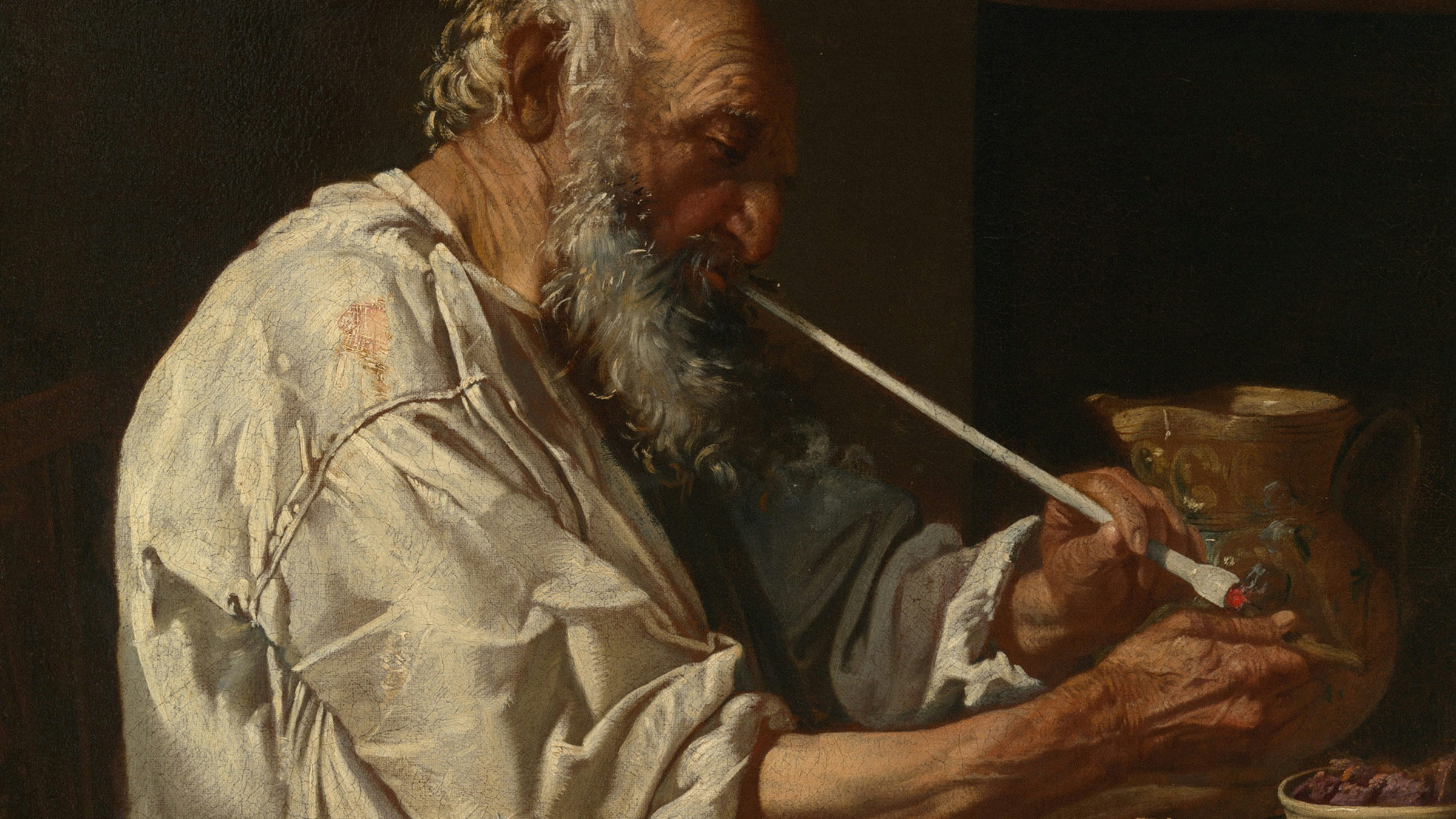
Old Peasant Lighting a Pipe

Old Peasant Lighting a Pipe

Artist: Adriaen van Ostade Date: c. 1660s Medium: Oil on panel Dimensions: Approximately 33 × 26 cm (13 × 10 1/4 in.) Period: Dutch Golden Age, Baroque

About This Painting

Adriaen van Ostade painted this small panel around 1660. He specialized in scenes of everyday life in Dutch villages and taverns. This painting shows a single figure lighting his pipe in a dim interior.

A single light source—likely the flame used to light the pipe—illuminates the peasant's face. The rest of the scene remains in shadow, creating strong contrasts. Van Ostade applies Baroque chiaroscuro techniques to a modest subject. The warm, golden tones are typical of Dutch painting from this period.

Van Ostade carefully renders textures: the rough fabric of the clothing, the weathered features of the face, and the dim interior space. He shows the peasant without idealization, focusing on accurate observation rather than heroic presentation. This approach to everyday subjects was common in Dutch art.

Baroque Context

Dutch Baroque painting emphasized realism, everyday subjects, and small scale rather than the large mythological and religious scenes common in Catholic countries. Dutch artists like van Ostade still used Baroque techniques, especially dramatic lighting derived from Caravaggio's work.

Van Ostade uses chiaroscuro here to focus attention on the peasant's face. The single light source, careful study of shadow, and close observation of the figure show Baroque techniques adapted for Dutch Protestant patrons who preferred everyday subjects over religious or mythological scenes.

Dutch genre paintings sometimes contained moral meanings. A pipe-smoking peasant might suggest themes of time, mortality, or life's simple pleasures. However, the primary appeal was the accurate observation of everyday life and the technical skill in rendering light and texture.

Historical Significance

Adriaen van Ostade was one of the most celebrated genre painters of the Dutch Golden Age, and his works were highly prized by collectors throughout Europe. His paintings of peasant life combined technical excellence with genuine sympathy for his subjects, avoiding both crude caricature and excessive sentimentality.

This painting exemplifies the Dutch achievement in genre painting— the elevation of everyday life to the status of fine art. While academic theory placed history painting at the top of the artistic hierarchy, Dutch artists demonstrated that profound artistic and human truths could be found in the humblest subjects. Van Ostade's influence extended well beyond his lifetime, inspiring later artists who sought to depict ordinary life with dignity and technical mastery.

Back to Gallery