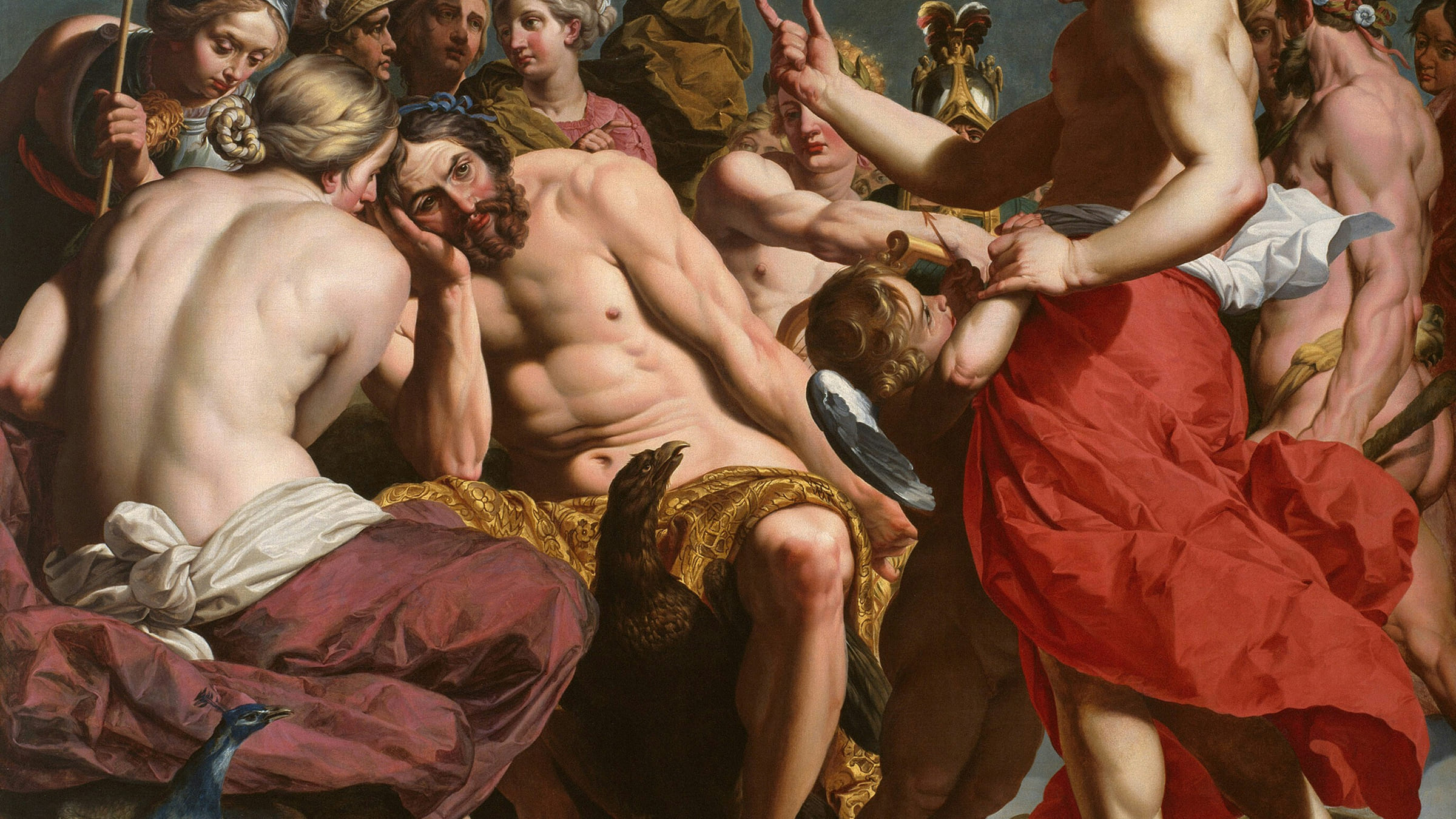
Jupiter Rebuked by Venus

Jupiter Rebuked by Venus

Artist: Paolo de Matteis Date: 1706-1710 Medium: Oil on canvas Dimensions: 217.2 × 182.9 cm (85 1/2 × 72 in.) Period: Baroque, Early 18th Century

About This Painting

This painting shows a scene from classical mythology: Venus reproaches her father Jupiter for his infidelity to Juno. Venus stands at the center, gesturing toward Jupiter, who reclines among other gods and figures. The composition uses diagonal lines, strong contrasts of light and shadow, and expressive gestures.

Paolo de Matteis painted this work in Naples around 1706-1710. He trained in the tradition of Luca Giordano. The painting follows the grand manner style—large scale, mythological subject, and dramatic presentation. The scene includes cupids and other mythological figures arranged around the central confrontation.

De Matteis uses chiaroscuro to create depth, with light falling on the main figures while others remain in shadow. The drapery shows careful attention to folds and movement. The color palette emphasizes reds, golds, and flesh tones typical of Italian Baroque mythological scenes.

Baroque Context

The Baroque period lasted roughly from 1600 to 1750. Artists used dynamic compositions, dramatic lighting, and strong emotion. Large-scale mythological and religious paintings were common, especially for court and church patrons.

De Matteis uses typical Baroque techniques here: diagonal composition, strong chiaroscuro, and expressive gestures. The figures' poses and expressions convey emotion and movement.

Mythological subjects were popular in European courts and academies. These paintings showed the patron's education and classical knowledge. The story of Venus rebuking Jupiter would have been familiar to educated viewers who knew classical mythology.

Historical Significance

Created during the twilight of the Baroque era, this painting represents the continuation of grand manner painting traditions in early 18th-century Naples. De Matteis was one of the leading painters in Naples during this period, working for both religious institutions and aristocratic patrons across Europe.

The work demonstrates the international character of Baroque art, with influences from Roman, Venetian, and Neapolitan painting traditions. Its theatrical quality and emphasis on narrative clarity made such mythological scenes popular among educated viewers who could appreciate both the technical skill and the classical references.

Back to Gallery