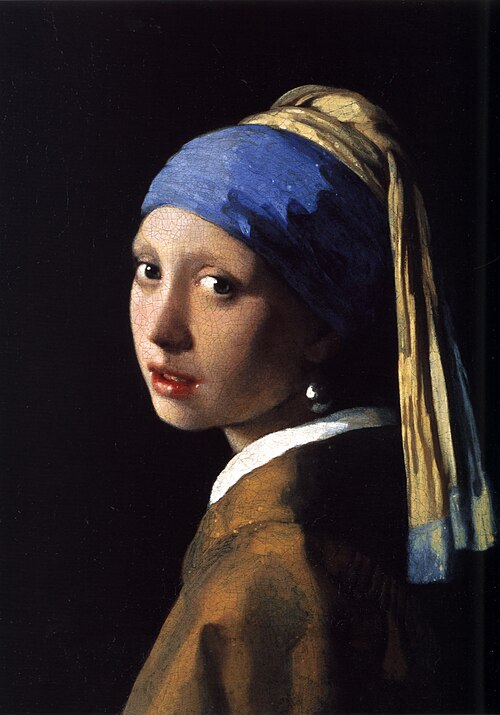
Girl with the Pearl Earring

Girl with the Pearl Earring

Artist: Johannes Vermeer Date: c. 1665 Medium: Oil on canvas Dimensions: 44.5 × 39 cm (17.5 × 15.4 in.) Period: Dutch Golden Age

About This Painting

This iconic portrait shows a young woman in exotic dress, glancing over her shoulder at the viewer. She wears a blue and yellow turban and a large pearl earring that catches the light. The painting is sometimes called the "Mona Lisa of the North" for its enigmatic quality and the subject's captivating gaze.

Johannes Vermeer painted this work around 1665 in Delft. The painting is a "tronie"—a Dutch term for a character study or head study rather than a formal portrait. Tronies allowed artists to explore expressions, lighting effects, and exotic costumes without the constraints of commissioned portraiture. The identity of the sitter remains unknown, adding to the painting's mystique.

Vermeer's masterful handling of light transforms this simple composition into something extraordinary. The soft illumination on the girl's face, the gleam of the pearl, and the subtle gradations of tone in the background demonstrate his unparalleled technical skill. The dark background focuses attention entirely on the figure, while the slightly parted lips and direct gaze create an intimate connection with the viewer.

Baroque Context

Vermeer represents the quieter side of Baroque art. While Italian and Flemish Baroque painters created large, dramatic religious and mythological scenes, Dutch Golden Age artists like Vermeer focused on intimate interior scenes and portraits. Yet his work shares the Baroque fascination with light and its effects on surfaces and textures.

The painting demonstrates Baroque principles applied to a smaller scale and different subject matter. The dramatic lighting emerging from the left side creates strong tonal contrasts. The exotic costume—particularly the turban—reflects the Baroque interest in the foreign and unusual. The pearl earring serves as a focal point, drawing the eye with its lustrous highlight.

Vermeer's technical approach involved careful observation and likely the use of a camera obscura, an optical device that projects images. This allowed him to capture subtle effects of light with remarkable precision. The smooth, almost photographic quality of his surfaces differs from the more gestural brushwork of other Baroque painters, yet achieves similar effects of depth and luminosity.

Historical Significance

Today this painting ranks among the most recognized images in Western art, but Vermeer remained relatively obscure for centuries after his death in 1675. He produced only about 35 paintings during his lifetime, working slowly and supporting his large family as both artist and art dealer. His reputation was revived in the 19th century when French critic Théophile Thoré-Bürger championed his work.

The painting exemplifies the artistic culture of the Dutch Republic in its golden age. Unlike courts and churches in other parts of Europe, Dutch patrons were largely middle-class citizens who bought art for their homes. This market supported painters who specialized in specific genres—landscapes, still lifes, interiors, portraits. Vermeer's intimate scale and domestic subjects reflect this unique artistic economy, while his extraordinary technical refinement elevates simple subjects to the level of profound visual poetry.

Back to Gallery