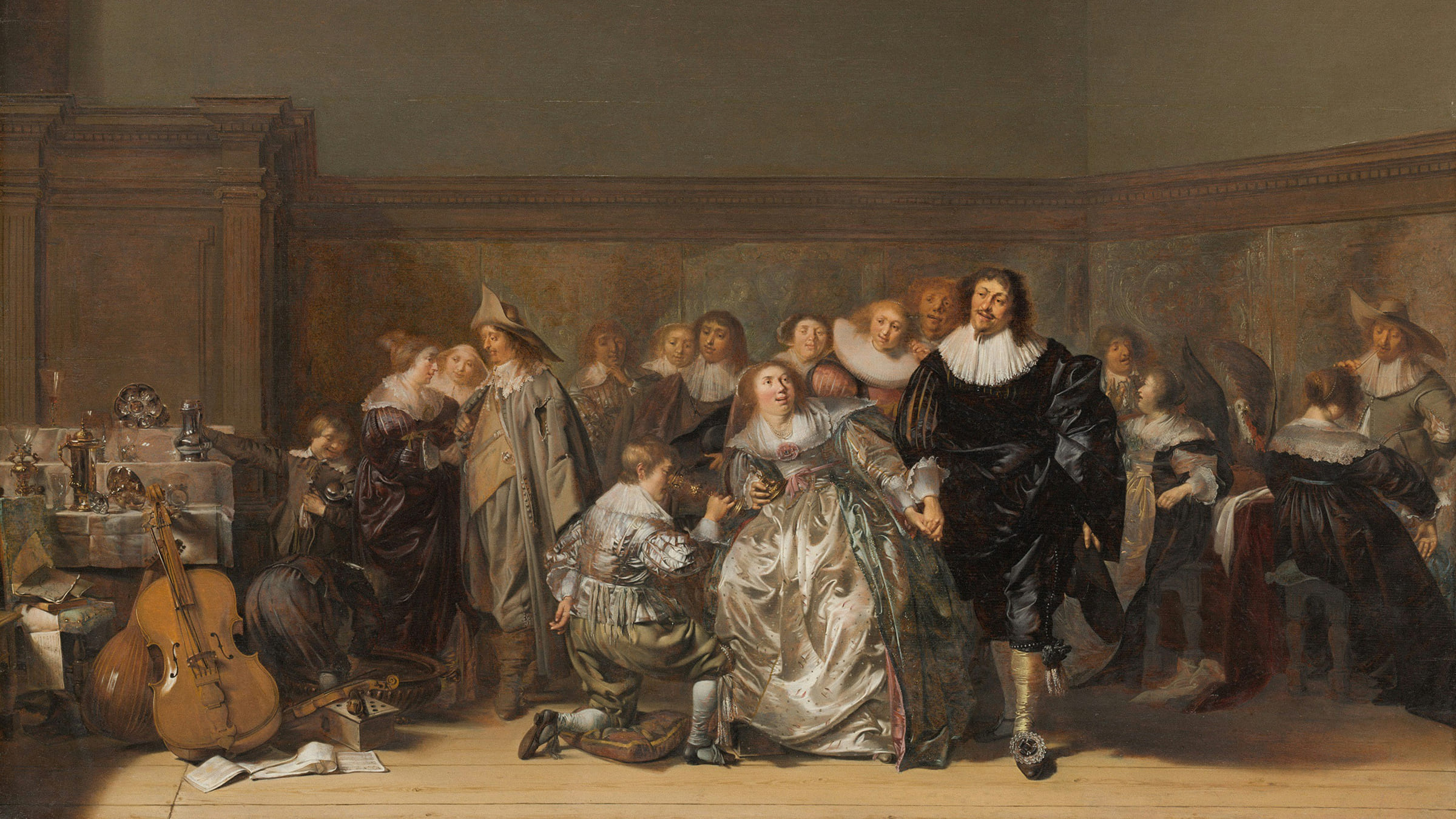
An Elegant Company

An Elegant Company

Artist: Christoffel Jacobsz van der Lamen Date: c. 1630-1635 Medium: Oil on panel Dimensions: 49.5 × 68.6 cm (19 1/2 × 27 in.) Period: Flemish Baroque

About This Painting

This painting shows a gathering of well-dressed men and women in an interior. It belongs to the "merry company" (vrolijk gezelschap) genre popular in Flemish and Dutch Baroque painting. Christoffel Jacobsz van der Lamen specialized in scenes of fashionable society at leisure.

The figures wear the latest fashions of the 1630s. Some engage in conversation, while musical instruments suggest entertainment. Van der Lamen carefully renders costume details, fabric textures, and the way light falls on silk and other materials. The painting shows both technical skill and close observation of contemporary fashion.

Van der Lamen arranges figures in space to create depth, with architectural elements framing the scene. The warm color palette and handling of light create a sense of an interior space. Details like elaborate lace collars and tableware show the wealth of the subjects.

Baroque Context

The "merry company" genre was popular during the Baroque period, especially in the Low Countries where a prosperous merchant class bought paintings showing their lifestyle. These works combined Baroque naturalism and careful observation with scenes of social life typical of Protestant mercantile culture.

Flemish Baroque painting combined the dramatic style of Rubens with the detailed realism of Dutch painting. Van der Lamen's work shows this combination: the composition has the complexity of history painting but shows contemporary social life rather than mythological or religious subjects.

These paintings sometimes contained moral messages. Music, wine, and courtship could suggest life's transience or the dangers of excess. However, the main appeal was showing an aspirational lifestyle—refined, cultured, and prosperous. They reflected the patrons' social world and demonstrated their cultural sophistication.

Historical Significance

This painting provides valuable insight into the social customs, fashion, and interior decoration of the Flemish elite during the early Baroque period. The costumes depicted—with their elaborate ruffs, lace, and silk fabrics—represent the height of fashion in the 1630s, while the interior setting shows the furnishings and decorative arts that surrounded the wealthy merchant class.

Van der Lamen was active in Antwerp during a period of relative prosperity following the Twelve Years' Truce. His elegant company scenes captured the optimism and material success of the Flemish commercial elite. These works were highly popular among his contemporaries and continued to influence genre painting throughout the 17th century, establishing conventions for depicting fashionable society that would persist in European art.

The painting exemplifies how Baroque art adapted to serve the interests of different social classes and cultural contexts. While maintaining the technical sophistication and visual richness characteristic of Baroque style, it celebrates secular, contemporary life rather than religious or mythological subjects, demonstrating the versatility and broad appeal of Baroque artistic principles.

Back to Gallery