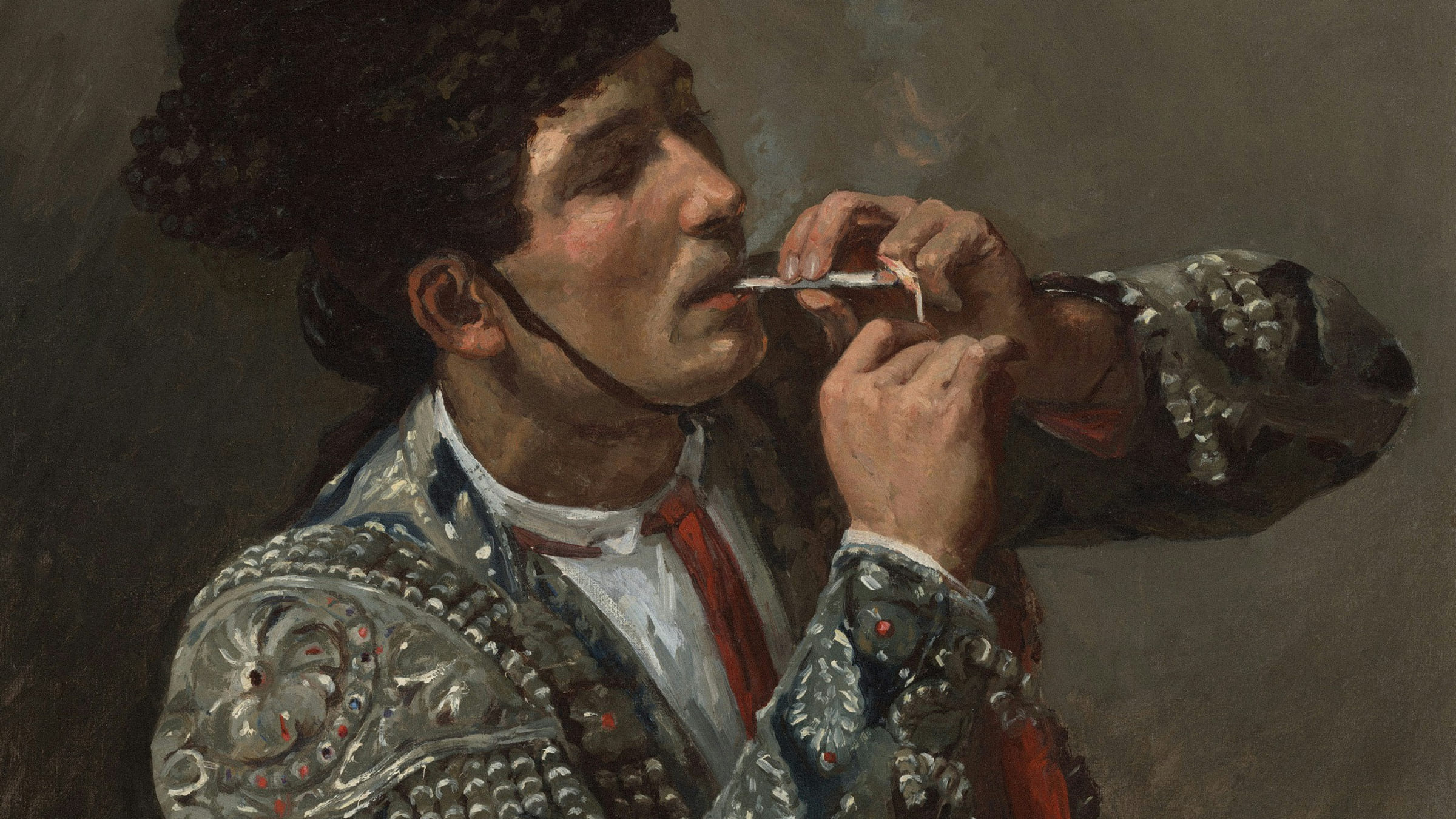
After the Bullfight

After the Bullfight

Artist: Mary Cassatt Date: 1873 Medium: Oil on canvas Dimensions: 82.6 × 64.1 cm (32 1/2 × 25 1/4 in.) Period: Post-Baroque, Realist Tradition

About This Painting

This painting shows a moment after a Spanish bullfight. A toreador in his elaborate costume stands with elegantly dressed spectators. Mary Cassatt, an American painter who worked mostly in France, painted this in 1873 during her early period when she explored European subjects.

Cassatt painted Spanish themes, a subject popularized by artists like Édouard Manet. The dramatic lighting and rich colors show the influence of Spanish painting and Baroque art. Cassatt carefully renders costume details and shows the interaction between figures.

The composition shows an intimate moment, typical of Realist painting but using dramatic lighting from Baroque traditions. The bright matador's costume contrasts with darker surroundings, drawing attention to the central figures.

Baroque Context

Although painted in 1873, this work uses Baroque compositional and lighting techniques. The dramatic chiaroscuro, rich colors, and theatrical presentation show the influence of Baroque masters like Velázquez and Caravaggio on later artists.

Baroque art emphasized drama, emotion, and significant moments. Cassatt's painting, though smaller than grand Baroque works, uses similar techniques: strong contrasts of light and shadow, careful attention to fabric and texture, and psychological depth in the figures.

Spanish Baroque painting, especially Velázquez's work, influenced 19th-century artists. The combination of realism, dramatic lighting, and dignified presentation in Spanish Golden Age painting informed Cassatt's approach here.

Historical Significance

This painting was created during Cassatt's formative years as an artist, when she was studying the works of Old Masters in European museums and developing her distinctive style. Spain and Spanish subjects were popular among progressive artists of the period, representing both exotic appeal and connection to the great painting traditions of Velázquez and Goya.

The work demonstrates Cassatt's versatility beyond the domestic scenes and mother-child compositions for which she later became famous. It reveals her engagement with dramatic subject matter and her ability to work within established painterly traditions while bringing her own modern sensibility to the composition.

Back to Gallery