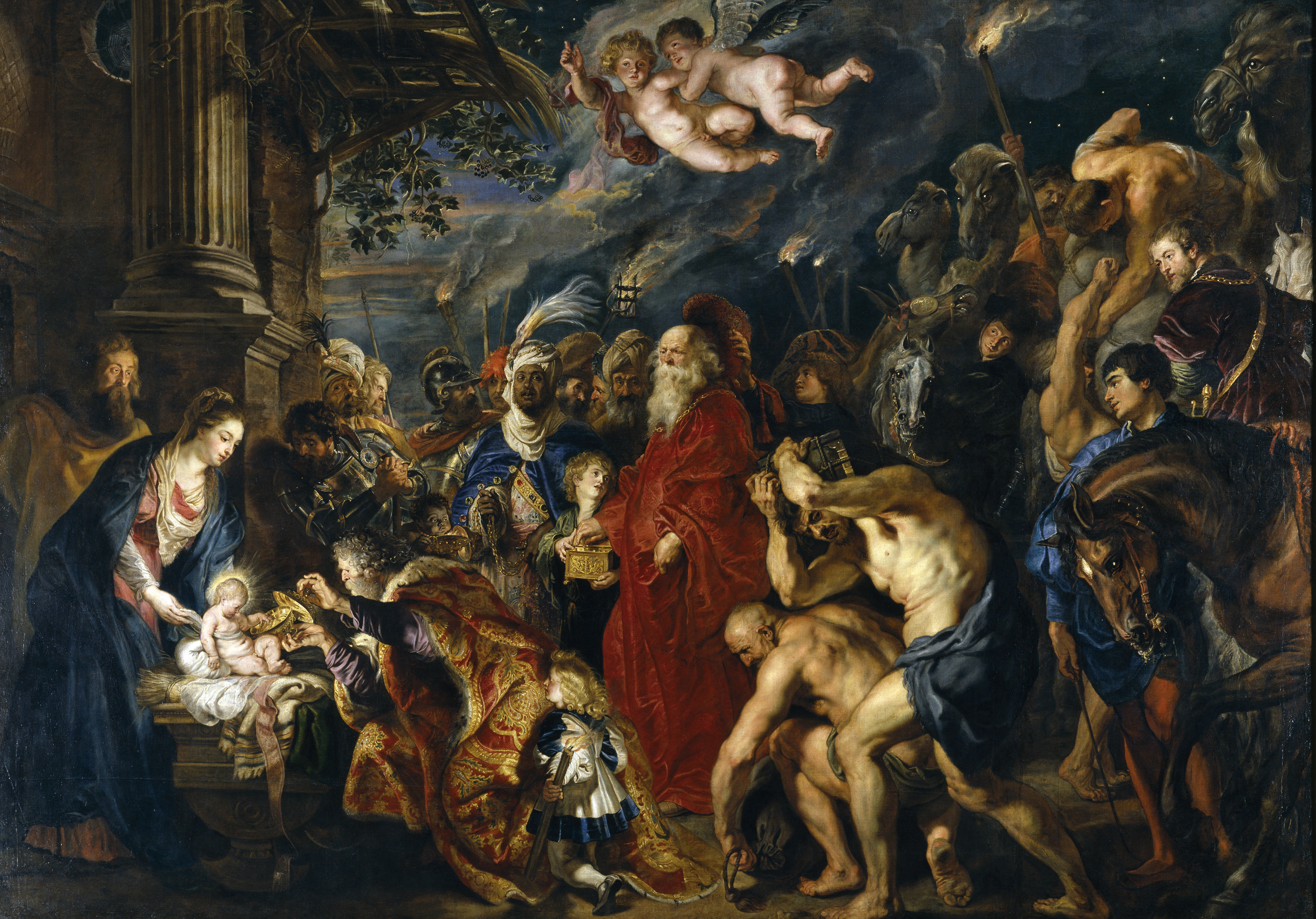
Rubens stands as the defining figure of Flemish Baroque painting. After studying in Italy, where he absorbed the lessons of Titian, Caravaggio, and Raphael, he returned to Antwerp in 1608 and became the most sought-after painter in Northern Europe. His workshop produced religious altarpieces, mythological scenes, portraits, and diplomatic commissions for churches and courts across Europe.
This painting exemplifies Counter-Reformation religious art. In response to Protestant criticism of religious imagery, the Catholic Church promoted art that was emotionally engaging, visually splendid, and theologically clear. Rubens' Adoration fulfills these requirements perfectly—it draws viewers into the sacred narrative through its scale, color, and emotional warmth while depicting a central Christian story.
The work demonstrates typical Baroque characteristics: dynamic composition, rich color, dramatic lighting, and emotional intensity. Unlike the more austere approach of Dutch Protestant painting or the dramatic darkness of Caravaggio, Rubens creates a vision of abundance and celebration. His style influenced painters throughout Europe and established a tradition of grand manner painting that continued for generations.